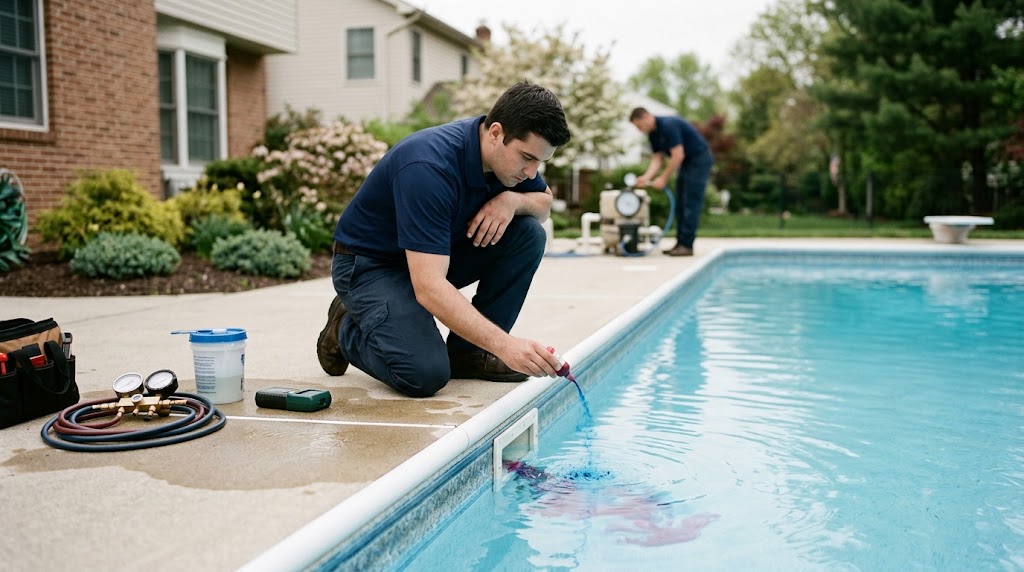
Isolating In-Ground Pool Leaks and Underground Pipe Fractures in Livingston
A backyard swimming pool is a major investment and an essential center of summer relaxation for many Livingston households. However, when your pool begins losing more than a quarter-inch of water daily, chemical costs surge, automatic chlorinators struggle, and escaping water risks washing away supporting soil beneath expensive pool decking. Our specialized swimming pool leak repair Livingston diagnostic team isolates structural liner tears, skimmer throat fissures, and buried underground plumbing pipe breaches without destructive patio demolition.
Whether you own an expansive gunite pool in Northfield Center or a vinyl liner pool near West Livingston, our non-invasive acoustic hydrophones, localized dye tests, and pneumatic line isolation protocols locate leaks with surgical accuracy.
Signs Your Livingston Pool Has an Active Leak
Recognizing the difference between natural summer evaporation and an active structural or plumbing leak is critical:
- Accelerated Water Level Drops: Losing more than one-quarter inch of water within 24 hours under moderate summer weather conditions.
- Air Bubbles in Pump Basket or Return Jets: A persistent stream of micro-bubbles discharging through wall return jets or a pump pot struggling to hold prime indicates a suction-side plumbing break.
- Saturated, Spongy Lawn Near Equipment or Pool Edge: Unexplained standing water, sinking patio pavers, or waterlogged turf between the pool coping and filtration filter pad.
- Cracking or Separation in Skimmer Throats: Hairline fractures developing where concrete coping joins plastic skimmer boxes, allowing water to drain into surrounding sub-base sand.
- Excessive Chemical Consumption: Having to add stabilizer, salt, or balancing chemicals continuously because untreated fresh makeup water is constantly replenishing the pool.
Local Causes: Winter Freeze-Thaw and Aging Pool Plumbing
Northern New Jersey's harsh winters represent the primary cause of pool plumbing damage across Essex County. If winterizing blow-outs leave trapped water inside underground suction lines, return lines, or light conduits, freezing temperatures expand that water, shearing PVC fittings beneath concrete pool decking. Furthermore, older backyard pools in Livingston installed in the 1970s and 1980s often feature original rigid PVC or flexible PVC hose that becomes brittle under decades of soil pressure and chemical exposure.
Our Precision Non-Invasive Pool Leak Detection Method
We test both the structural containment shell and underground circulation plumbing systematically:
Calibrated Evaporation Bucket Verification
We verify real fluid loss versus weather evaporation using a standardized bucket test, confirming exact daily water loss metrics with filtration pumps running and shut off.
Micro-Targeted Hydrostatic Dye Testing
Using concentrated, non-toxic fluorescent dyes injected around underwater skimmer throats, return fittings, main drains, and light niche conduit entries, we track dye drawn into microscopic structural cracks.
Pneumatic Pressure Testing of Circulation Loops
Using inflatable rubber test plugs, we seal individual skimmer lines, main drains, and return loops to pressurize each section with air or water, observing digital pressure decay to identify leaking pipe circuits.
Sub-Deck Ultrasonic Acoustic Hydrophone Listening
Our underwater hydrophones and underground acoustic listening probes isolate the precise sound of pressurized water escaping underground PVC joints beneath concrete decking.
Dealing with an Inground Pool Leak in Livingston?
If you suspect an inground pool leak Livingston homeowners should never let water continuously drain into the soil behind pool walls. Escaping water can hollow out the soil beneath concrete pavers or cause vinyl liners to float and wrinkle. Call our pool diagnostics team directly at (201) 510-1615.
What Happens After the Leak is Found: Repair Solutions Compared
Pinpointing the exact failure allows your pool repair professional or NJ licensed master plumber to choose targeted repairs:
| Leak Location | Typical Cause | Targeted Repair Method | Decking Impact |
|---|---|---|---|
| Skimmer Throat or Flange | Freeze separation or structural settling | Underwater epoxy injection or skimmer throat re-grouting | Zero deck disturbance |
| Underground Return Line | Freeze fracture or root crushing | Targeted 2'x2' deck cutout repair or trenchless sleeve | Minimal, surgical access opening |
| Light Niche Conduit | Unsealed electrical cord entry | Specialized silicone light niche plug or conduit replacement | Zero deck disturbance |
| Vinyl Liner Pinhole / Tear | Debris puncture or liner aging | Submersible ultrasonic vinyl patch | Zero deck disturbance |
Cost Factors for Pool Leak Detection
Pool leak detection pricing depends on pool size, feature complexity (such as attached spas, waterfalls, or auto-fill valves), whether the pool is vinyl or gunite, and whether multiple plumbing lines have experienced winter freeze damage. Pinpointing before digging avoids thousands of dollars in unnecessary deck demolition.
Pool Leak Prevention Tips for Homeowners
- Ensure thorough winterization blow-out of all suction and return lines using professional high-volume air blowers before December.
- Install winterizing Gizzmo expansion compensators inside all skimmer boxes to absorb freezing ice expansion pressure.
- Inspect underwater pool light cord seals annually to prevent water entering electrical conduits.
- Maintain consistent water balance to protect rubber pump seals and copper heat exchangers from aggressive corrosion.
When a Pool Leak Requires Immediate Attention
If your pool is losing several inches of water within hours, causing surrounding concrete decking to sink, or threatening nearby home foundations, shut off pool filtration equipment immediately and contact our diagnostic team. For domestic plumbing or irrigation lines, review our water line leak detection and hidden water leak detection guides.
Our team diagnoses pool plumbing leak Livingston NJ properties throughout Northfield Center, Livingston Center, and West Livingston. Learn more about local service coverage by visiting our Livingston Service Areas or checking our primary leak detection in Livingston guide.
Frequently Asked Questions About Pool Leak Detection
Place a bucket filled with pool water on the top pool step, marking the water levels inside and outside the bucket. After 24 hours under identical weather conditions, if the water level in the pool has dropped significantly more than the water in the bucket, an active structural or plumbing leak exists.
During freezing Essex County winters, residual water left inside skimmer throats, return fittings, or underground suction lines freezes, expands, and fractures PVC pipe walls. When pumps are restarted during spring opening, water escapes under pressure.
Yes. Our technicians use pneumatic test plugs to isolate individual return and suction lines underwater without draining, and utilize specialized non-toxic fluorescent dyes around underwater fittings while the pool remains full.