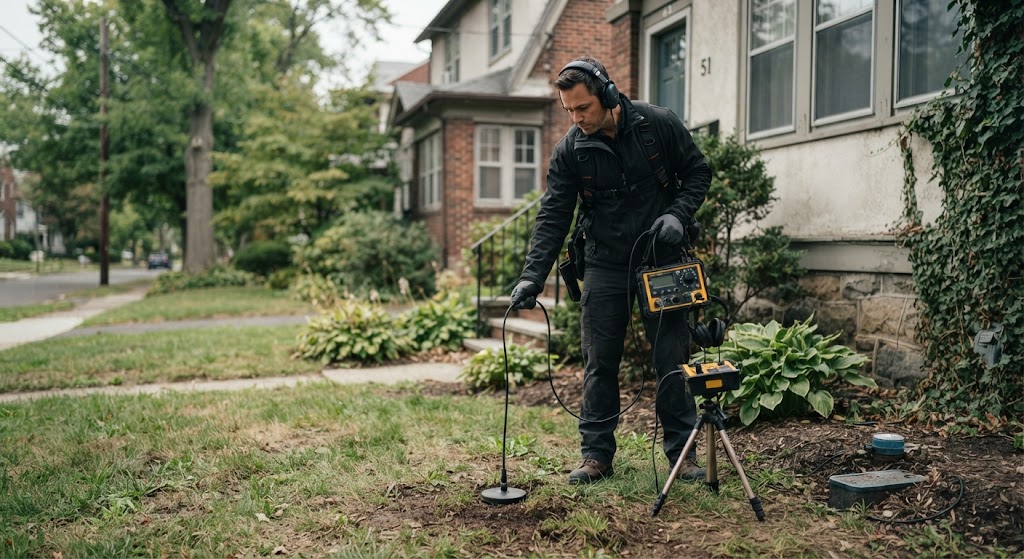
Pinpointing Underground Water Service Line Leaks in Livingston
Your property's main water service line is the high-pressure buried pipe that transports treated water from the municipal water main at the street curb into your home. When this subterranean line cracks or corrodes, thousands of gallons of water can saturate your front yard or seep through basement foundation walls. Rather than digging extensive exploratory trenches across your lawn, our specialists perform non-invasive underground water leak detection Livingston homeowners trust to locate subterranean pipe fractures quickly and cleanly.
Properties in Livingston—particularly those with expansive front setbacks in Northfield Center or near Riker Hill Art Park—often feature long residential service lines running 60 to 120 feet beneath landscaped lawns, asphalt driveways, and concrete walkways. Pinpointing the exact break point saves thousands in unnecessary landscaping and paving restoration.
Warning Signs of a Main Water Line Break
A damaged exterior water service line often reveals itself through subtle exterior and pressure indicators:
- Soggy, Marshy Patches in the Lawn: Unexplained standing water, spongy grass, or unusually lush, fast-growing green strips across your front lawn during dry summer weeks.
- Significant Drop in Indoor Water Pressure: When opening two fixtures simultaneously causes flow to diminish to a trickle, water may be escaping from a cracked main water line leak Livingston pipe underground.
- Audible Hissing at the Foundation Entry: Placing an ear or listening rod against the copper pipe entering your basement wall reveals the continuous sound of running water even when the indoor main shut-off valve is closed.
- Sinkholes, Pavement Cracking, or Soil Depressions: Escaping high-pressure water washes away supporting subterranean sub-base sand, creating depressions or sunken driveway pavers.
- Sudden Water Discoloration or Sediment: Dirt, sand, or rust flakes entering household plumbing fixtures when soil gets drawn into an underground service line fracture.
Why Underground Service Lines Fail in Livingston
Livingston's climate and housing age subject buried service lines to severe environmental stresses:
- Deep Winter Freeze-Thaw Ground Shifts: Northern New Jersey experiences substantial frost penetration during January and February. As topsoils freeze, expand, and thaw, shifting ground loads place shear pressure on rigid subterranean copper and galvanized pipe connections.
- Tree Root Intrusion from Mature Canopies: Beautiful mature oak, maple, and pine trees lining Livingston's residential avenues exert significant radial pressure on buried pipes, eventually stressing joints.
- Aging Galvanized and Lead Water Service Lines: Historic properties built prior to modern plumbing standards frequently still rely on aging galvanized iron or lead service lines that have reached the end of their operational lifespans.
New Jersey Lead Service Line Replacement Mandate
New Jersey requires water utilities to systematically identify and replace lead and galvanized service lines across the state. Furthermore, before any exterior excavation or water service line repair Livingston NJ takes place, state law requires notifying New Jersey One Call by dialing 811 at least three full business days in advance to mark gas, electric, and telecommunication infrastructure safely.
Our Non-Invasive Exterior Line Detection Method
We trace and pinpoint buried water service pipes using acoustic frequency analysis and electromagnetic line locating:
Curb Stop Pressure Verification
We verify pressure differential between the municipal street shut-off valve and the internal building shut-off valve to isolate the service lateral with precision.
Electromagnetic Pipe Locating
An electromagnetic transmitter induces a traceable frequency along the metallic or traceable conductive water line, mapping its exact underground path and burial depth across the property.
Acoustic Ground Microphone Correlation
Using digital sound correlators and heavy ground microphones positioned directly above the mapped pipe path, we capture the distinct noise signature of high-pressure water blasting into subterranean soil.
Pinpoint Surface Marking
We clearly mark the exact surface coordinates of the underground leak, enabling targeted excavation rather than indiscriminate trenching across yards or driveways.
What Happens After the Leak is Found: Repair Options Compared
When our team isolates the subterranean rupture, your licensed master plumber can recommend the most practical water service line repair Livingston NJ strategy:
| Repair Strategy | How It Works | Disruption Level | Suitability |
|---|---|---|---|
| Targeted Excavation Spot Repair | Excavate a small 4'x4' access hole directly over the marked leak location to replace the broken pipe section with heavy-duty copper fittings. | Minimal lawn disruption | Ideal when the overall service line pipe material is in sound condition and failure is localized. |
| Trenchless Directional Boring or Pull | Pull a continuous, seamless polyethylene (HDPE) water line through the existing path using pneumatic piercing tools or pipe bursting. | Near-zero surface disturbance | Best for long runs passing beneath mature trees, paved driveways, or ornate landscaping. |
| Full Open-Cut Line Replacement | Trench from curb stop to foundation wall to install an entirely new Type K copper or certified HDPE service line. | Significant surface excavation | Necessary when older lead or severely corroded galvanized pipe requires mandatory full replacement. |
Cost Factors for Water Line Leak Detection
Locating an underground service line depends on pipe depth (usually 3.5 to 4 feet in New Jersey to sit safely below the regional frost line), the total length of the service lateral from curb to foundation, the presence of asphalt driveways or retaining walls over the run, and soil moisture conditions. Pinpointing before digging prevents thousands of dollars in unnecessary excavator rental and landscape restoration costs.
Preventing Future Water Service Line Failures
- Ensure proper soil compaction around service laterals during any nearby landscape or grading projects.
- Protect exterior spigots with frost-free sillcocks and interior winter shut-off valves before the onset of freezing December temperatures.
- Always confirm utility marks through NJ 811 before installing fence posts, planting mature trees, or pouring driveway asphalt.
When an Underground Line Break is an Emergency
If water is washing out driveway gravel, undermining your front foundation wall, or flooding directly into your basement through the main service pipe sleeve, treat the situation as an immediate crisis. Shut off the water supply valve and contact us for emergency leak repair diagnostic support. For interior slab concerns, consult our slab leak detection resources.
Underground line issues are common in both established residential lots throughout Livingston Center and newer homes along the West Livingston borders. Explore our complete guide to leak detection in Livingston or review our Livingston Service Areas to learn more.
Frequently Asked Questions About Water Line Leaks
In Livingston Township, the municipal or private water utility typically owns the water main in the street and the curb stop shutoff valve near the property line. The property owner is legally and financially responsible for the service lateral pipe extending from the curb stop into the home.
New Jersey state law mandates that anyone excavating must call New Jersey One Call at 811 at least three business days prior to digging. This alerts utility companies to mark underground gas, electric, communication, and sewer lines to prevent catastrophic utility strikes.
New Jersey state legislation requires public water systems to inventory and completely replace all lead and galvanized steel service lines. If your underground line leaks and contains lead, modern replacement regulations apply.